About R.E.A.L.®
We equip schools to explicitly teach The Other AI: Authentic Interaction.
R.E.A.L.® Discussion embeds explicit instruction in conversation skills into your existing program — preparing students for learning, for life, and for our shared future.
Our Story
Built by educators, for real classrooms
As a teacher and school leader, Liza Garonzik realized that her Gen Z and Gen Alpha hated live conversation: they found it hard, awkward, even scary! Yet, Liza saw conversation skills as essential: for school, life, democracy, and humanity in an AI world!
Over the next decade, she built R.E.A.L.® Discussion: the first research-informed model for teaching – and assessing – live discussion skills. At this point, it’s not just theory: it’s been tested by 17,000 real students, 1000 real teachers, and 100 schools. And it works.
Today, R.E.A.L.® partners with schools to bring conversation science to the classroom. We prepare you to teach, measure, and celebrate discussion skills – starting in your core Humanities classrooms.
Our secret ingredient? We are educators who understand and respect how schools actually work, futurists who see human connection as essential in a tech-centric world, and optimists who believe deeply in our students and our shared future.
New from R.E.A.L.®
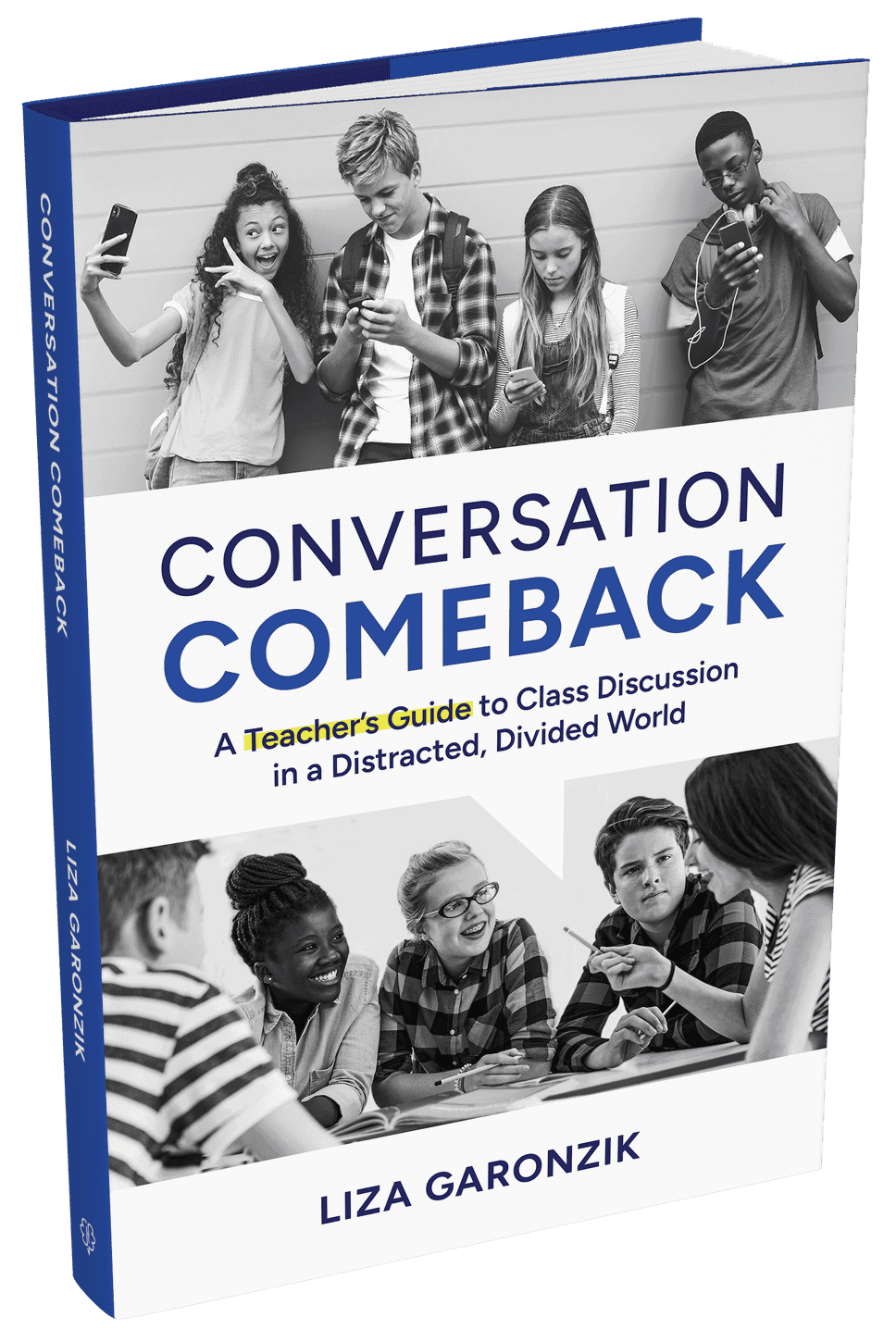
Conversation Comeback
A Teacher’s Guide to Class Discussion in a Distracted, Divided World — by Liza Garonzik
Learn MoreProgram Preview
The art of discussion, made teachable
R.E.A.L.® is a method for breaking the deeply human art of great discussion into teachable, assessable, transferable skills — for students who would rather text than talk.
Our People
Meet the Team
Our Trainers — PD by teachers, for teachers

Liza Garonzik
Founder + CEO
Liza Garonzik is the Founder of R.E.A.L.® Discussion and the author of Conversation Comeback: A Teacher’s Guide to Class Discussion in a Distracted, Divided World and Conversation Comeback: A Schoolwide Guide for Discussion in a Distracted, Divided World. She built R.E.A.L.® to solve for challenges she faced in her roles as a teacher, student life administrator, advancement officer, alumni volunteer, and Trustee in independent schools.
Since launching in 2021, Liza has partnered with over 100 K–12 schools on discussion skill-building. Her work has been featured nationally and internationally through the Wall Street Journal, National Association of Independent Schools, The Association of Boarding Schools, International Schools Services, Transcend Education Models Exchange, Enrollment Management Association, and more.
Liza is a graduate of Harvard College (A.B.) and University of Pennsylvania (MS.Ed) with additional Fellowships at the Klingenstein Center, Transcend Network, and New Sector Alliance. She lives in Atlanta with her family — and many animals!

Emily Gromoll
Chief Learning Officer
Emily oversees the R.E.A.L.® Discussion Program, directing Faculty PD including the certification experience, impact reporting, coaching, and community events. Her favorite part? Discussing discussion with educators!
Emily joined R.E.A.L.® from Eskolta School Research and Design, where she developed expertise in adult learning. She coached teachers throughout NYC to design student engagement strategies and partnered with districts to create professional learning networks. Prior to Eskolta, she served as a History Department Chair and Teacher at an independent school.
Emily holds a BA from Columbia University in History and a Master’s in Education Policy, Organization, and Leadership from Stanford University. She lives in Hopewell, New Jersey with her family — and thirty chickens!
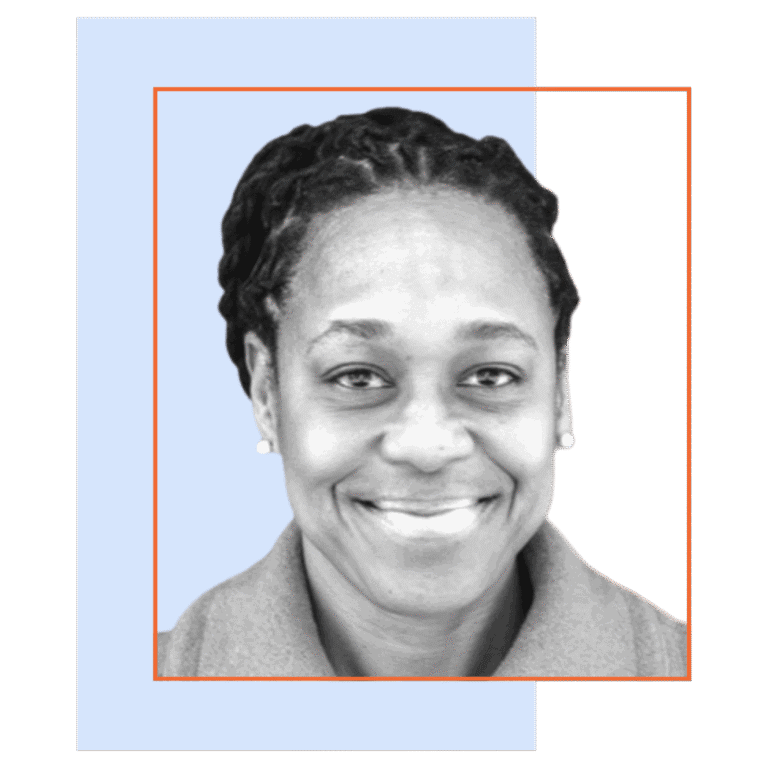
Dr. Sidra Smith
Head of Professional Learning
Sidra serves as the face of the organization in the K–12 independent school community: leading independent school partnerships, professional development, program implementation support, and idea incubation.
Sidra is an accomplished educator and leadership coach, with 30 years of experience fostering growth in others. She has experience in a wide range of school types across the US and internationally; she began her teaching career at an international school in West Africa, spent a year as a fellow in a New England boarding school, and has held faculty and senior administrative roles at various independent schools across the country.
Sidra holds a B.A. from Wesleyan University, an M.A. and Ph.D from Tufts University, and coaching certification from Georgetown University. She serves as a Trustee and Board Member at several non-profits.

Dr. Carri Schneider
Chief Marketing Officer
Carri serves as Chief Marketing Officer at R.E.A.L.® Discussion, where she helps strong ideas and effective practice spread with clarity and integrity. Her work focuses on translating R.E.A.L.’s approach into accessible stories and systems that reflect how real change actually happens in schools.
Carri brings more than 25 years of experience across education, philanthropy, and social impact. She previously led national storytelling and content strategy at XQ Institute, building media partnerships with PBS NewsHour, The Moth, The 74, and iHeartRadio. She is also the founder of Owl’s Nest Consulting and a longtime writer and editor at Getting Smart, leading and contributing to books, reports, articles, and field-building work focused on the future of learning.
A former classroom teacher and adjunct faculty, Carri holds a master’s degree in education and a doctorate in educational leadership. She lives in Cincinnati with her family and is the mom of a college student and a high school student, giving her a front-row seat to the realities R.E.A.L. exists to address. She’s also a devoted plant propagator, which she considers both a hobby and a metaphor.

Patrick Farmer
Trainer
Patrick Farmer facilitates R.E.A.L.® PD for Humanities Teachers: a role that authentically builds on his experience as a Teacher-Leader who has used R.E.A.L.® across several very different schools. Patrick finds that R.E.A.L.® breaks the art of discussion into teachable skills and loves helping middle schoolers learn to talk — and truly listen! — to each other.
Beyond REAL, Patrick serves as Humanities and Social Studies Lead at Nativity Preparatory School (MA). Patrick holds a B.A. from Fordham University and an M.Div from Boston College. He lives in the Boston area with his family.

Sumner McCallie
Trainer
Sumner McCallie facilitates R.E.A.L.® PD for Humanities Teachers: a role to which he brings deep pedagogical expertise and experience in change management in schools from Switzerland to Tennessee. Sumner believes that Discussion is a Discipline — part art, part science — and is a critical skill for young people to develop as they build their community and their country.
Beyond REAL, Sumner serves as Dean of Faculty and Academics at McCallie School (TN). The son of a US Ambassador, Sumner grew up internationally. He holds a B.S. from Yale University and an M.Ed from Vanderbilt University. He lives in Chattanooga with his family.

Kath Moriarty
Trainer
Kath Moriarty facilitates R.E.A.L.® Professional Development for Lower School: an opportunity that felt natural after her work designing the R.E.A.L.® Basics mini-lesson approach. Kath believes that communication skills — oral and non-verbal — are essential for young learners and should be taught with the same level of intention as literacy or math.
Beyond REAL, Kath serves as Director of Academic Support at Nashoba Brooks School (MA) and has experience as a Lower School teacher and literacy leader. Kath holds a B.A. and M.Ed from Vanderbilt University and lives outside Boston with her family.

Peyten Williams
Trainer
Peyten facilitates R.E.A.L.® for Parents, empowering parents to use REAL strategies to have deeper conversations with their adolescents. Helping teachers and parents align around what’s best for kids comes naturally to Peyten as she previously served as an award-winning Director of Teaching and Learning at Westminster (GA) and English Teacher.
Beyond REAL, Peyten leads Bowbend Consulting: an organization she founded to inspire and equip parents to raise thriving children of character. Peyten holds B.A. and M.Ed Degrees from the University of Virginia and lives in Atlanta with her family.
The results speak loudly — and listen closely
96%
of teachers would recommend R.E.A.L.® to a colleague
85%
of students feel like their classmates listen to them in R.E.A.L.® discussion
2x
as many students feel ready to self-facilitate a R.E.A.L.® discussion, without the teacher leading
93%
of students report more confidence in speaking up in discussion
80%
of students report feeling more comfortable disagreeing with classmates
83%
of students report that R.E.A.L.® helps them feel more comfortable changing their mind
The top five words teachers use to describe R.E.A.L.® PD:
FAQs
What is R.E.A.L.® Discussion, exactly?
R.E.A.L.® Discussion is a research-informed, practice-proven program that helps schools teach real-world communication skills through structured, academically anchored discussion. Built by and for educators, it transforms classroom talk into a powerful learning tool that strengthens the academic core and prepares students to lead, listen, and learn in today’s complex world. R.E.A.L.® breaks discussion into four core, teachable skills: Relate, Excerpt, Ask, and Listen. Through repeatable routines, student portfolios, and teacher dashboards, students build habits of deep engagement that extend far beyond the classroom.
What need does R.E.A.L.® address?
In many schools, discussion is “everywhere and nowhere.” Individual teachers may “have discussions,” but that is different from explicitly teaching discussion skills to ALL students. Usually, schools don’t have the shared language, common instructional practices, or assessment benchmarks they need to consistently and equitably teach discussion skills. In a world shaped by distraction, division, and accelerating automation, the stakes are high: these skills are uniquely human and empower students to engage academically, socially, and societally. R.E.A.L.® addresses this gap by helping schools embed communication as a core competency, usually first as part of humanities curricula. Ultimately, it equips students with real-world communication skills they’ll use in school, in relationships, in workplaces, and in life, and gives teachers the tools to teach and assess those skills with intention and impact.
What makes R.E.A.L.® different?
R.E.A.L.® is not a format, such as Socratic Seminar, or a toolkit, like Responsive Classroom. It is a comprehensive model for making discussion skills visible, measurable, and teachable. Unlike other approaches, R.E.A.L.® provides:
- A shared language and structure that spans grades and departments.
- Student-facing materials and teacher-facing dashboards.
- Assessment tools that support both academic rigor and classroom culture.
- Built-in routines for skill development, peer feedback, and reflection.
R.E.A.L.® is academically anchored, not an SEL activity or add-on. It turns speaking, listening, and questioning into instructional tools that strengthen student engagement and ensure EVERY student develops the communication skills they need to navigate school, life, and work. It is designed by educators, with educators, to fit real classrooms.
What research is R.E.A.L.® based on?
R.E.A.L.® is grounded in a wide and rigorous body of research that includes insights from Project Zero at Harvard, Jal Mehta and Sarah Fine’s work on deeper learning, Ron Ritchhart’s thinking routines, Angela Duckworth’s research on motivation and social-emotional development, and Justin Reich’s studies of schools as learning organizations at MIT. It also reflects John Hattie’s findings on the instructional strategies that drive student engagement, and Rebecca Winthrop’s work on re-engaging adolescents. These threads are brought together through the Science of Learning and Development (SoLD) and the science of adolescent learning, both of which emphasize the importance of relationship-rich, cognitively-engaging environments. R.E.A.L.® transforms this research into practical classroom tools using an action research approach by testing strategies in real-world contexts and improving them based on feedback. R.E.A.L.® earns credibility through its consistent application of evidence-based practices in classrooms to support student growth and academic success.
Why are discussion skills more critical now than ever?
In today’s polarized, screen-saturated world, conversation is breaking down. At the same time, the rise of AI has raised the stakes: the uniquely human skills of listening, connecting, and communicating are more essential and more teachable than ever. If we want students to thrive academically, socially, and professionally, we must explicitly teach them how to communicate with purpose.
What data or evidence do you have that R.E.A.L.® works?
We say R.E.A.L.® is “practice-proven” because schools that use our program report increased participation, engagement, and confidence. They describe deeper, richer conversations and stronger academic and personal dialogue. Teachers can track student growth in skills and habits, from listening and communicating to developing a sense of belonging and purpose. As an organization, we value teacher voice as much as student voice and have spent the last decade working with teachers to design the tools they need.
Where is R.E.A.L.® used today?
R.E.A.L.® is used in over 80 schools across 16 states, reaching students in Grades 2–12. Our partners include a range of school settings, all of which share a belief in the essential role of communication in student success. For stories from the field, visit our Blog or Testimonials.
Why do schools need R.E.A.L.® instead of building something similar in-house?
Schools recognize that communication is essential, but few have the time, tools, or research base to develop a comprehensive model from scratch. R.E.A.L.® is the product of over a decade of classroom-based iteration, shaped by real-world educator feedback. It includes everything schools need to teach and measure discussion, from routines to rubrics to dashboards. Building this independently can take years — especially amidst teacher and leader turnover — and often leads to inconsistent results. R.E.A.L.® offers a ready-to-implement, research-based system that accelerates progress without sacrificing quality.
How do schools decide whether to prioritize R.E.A.L.® amid competing priorities and initiatives?
Schools today face tight timelines, limited resources, and growing expectations. R.E.A.L.® helps by addressing multiple priorities at once. It strengthens instruction, supports student engagement, and equips young people with future-ready skills. It is not extra — it is foundational. Rather than adding one more thing, R.E.A.L.® helps schools double down on mission-critical skills, strengthen what they are already doing, and embed communication into the academic core. For many leaders, it becomes a lever for broader instructional improvement.
What does R.E.A.L.® Discussion look like for different age levels?
Our R.E.A.L.® programs are tailored to students at different grade levels. R.E.A.L.® Basics is designed for elementary students, while R.E.A.L.® Junior serves middle school students. In high school, R.E.A.L.® Classic is designed for underclassmen and R.E.A.L.® Extended for upperclassmen.
How does R.E.A.L.® integrate with our curriculum, strategic plan, or Portrait of a Graduate?
R.E.A.L.® supports schools in turning academic discussion into a driver of strategic goals. It seamlessly integrates into humanities curricula, reinforcing rigorous content and equitable engagement while also developing students’ executive function, collaboration skills, and higher-order thinking. As schools move toward learner-centered models and expanded outcomes, R.E.A.L.® equips teachers with practical ways to embed future-ready competencies like communication and collaboration into daily instruction. Every element, from dashboards to rubrics, is designed to align with and amplify what schools already do well.
How is R.E.A.L.® thinking about AI?
R.E.A.L.® is actively exploring how generative AI can enhance personalized learning for students by providing real-time feedback and adaptive learning pathways. By integrating AI tools thoughtfully, R.E.A.L.® supports teachers in identifying student needs quickly and tailoring instruction for differentiated learning, ensuring that teaching remains both rigorous and personalized. While AI improves efficiency and expands access, R.E.A.L.® keeps the human connection at its core. The program is built on face-to-face discussion, listening, and collaboration — skills that AI cannot replicate. Our teacher-facing dashboards already use data to generate insights without adding burden, and we continue to explore how AI can further streamline feedback and improve instructional quality.
What’s included in a R.E.A.L.® partnership?
Each partnership begins with collaborative planning to understand your goals, schedule, and instructional model. From there, R.E.A.L.® provides:
- Front-end design consulting to tailor the rollout.
- Professional development (asynchronous and live) that leads to teacher credentialing.
- Student-facing materials, including custom-branded Discussion Portfolios.
- Teacher-facing digital dashboards and impact reports.
- Optional leadership support and change management coaching.
The program is modular, scalable, and built to grow with your school.
Is this a one-time training or an ongoing program?
We have different paths depending on your needs. Our most successful clients do not opt for “one-and-done PD,” but instead commit to a multi-year initiative that includes training, implementation support, and impact assessment. Schools often begin with a pilot and then identify 2–3 key grade levels to embed R.E.A.L.® as a signature program. Our licensing model provides ongoing access to materials, professional development, impact data, and updates. Because R.E.A.L.® is modular, schools can scale at a pace that fits their needs and rhythms.
How does R.E.A.L.® support teachers?
R.E.A.L.® was built from the inside out. Every routine, prompt, and tool was developed in collaboration with teachers through classroom co-creation and real-time feedback. Teachers receive asynchronous professional development, live workshops, and tools to track the instructional impact through data. R.E.A.L.® is designed to reduce complexity, not add to it, giving teachers clear language, repeatable routines, and flexible implementation supports. Many describe it as the most energizing and practical professional development of their careers.
Stay connected
Let’s Talk – Or At Least Stay In Touch!
Join our mailing list to stay up to date on Conversation Comeback – the movement to teach, measure, and celebrate conversation skills in school.
Ready to talk? Send us a note and let’s get scheduled – there’s nothing we love more than live conversation with school leaders!
Start Here
Sign Up